Three Organizations, Three Visions for the Same Industry
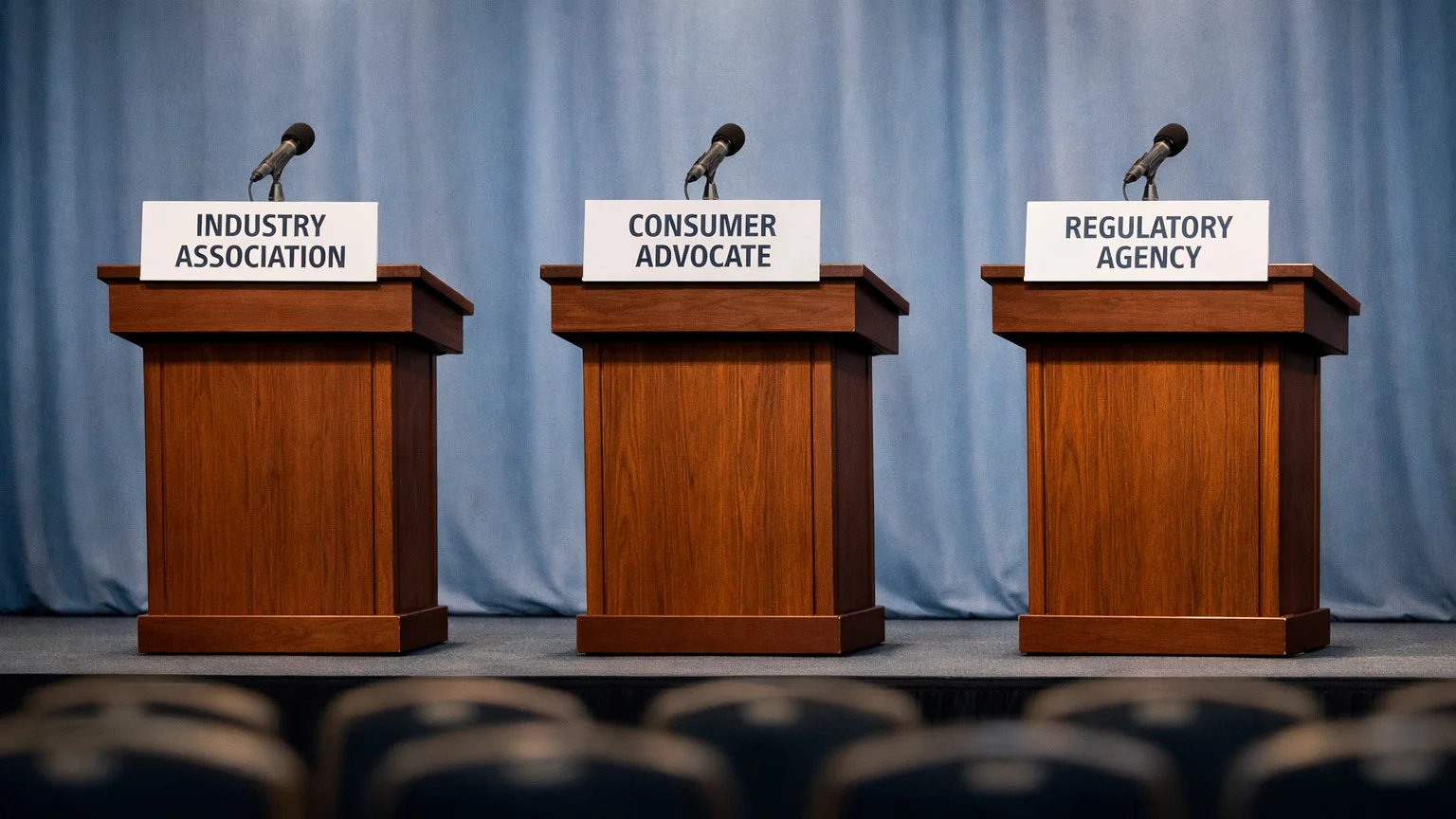
The sweepstakes casino industry’s future is being shaped by a tug-of-war between three organizations with fundamentally different interests. The Social Gaming Leadership Alliance represents established sweepstakes operators who want regulation. The Social and Promotional Gaming Association represents a newer coalition seeking to define the industry on its own terms. And the American Gaming Association represents regulated casinos that want sweepstakes operations either shut down or brought under the same licensing and tax framework they operate within. Understanding what each group advocates — and why — provides context for the legislative battles, lawsuits, and regulatory actions that determine whether sweepstakes blackjack continues to exist.
SGLA: The Case for Regulation from Within
The Social Gaming Leadership Alliance, led by executive director Jeff Duncan, takes the most conciliatory position in the sweepstakes debate. The SGLA’s core argument is that sweepstakes casinos should be regulated, should pay taxes, and should operate under a formal licensing framework — rather than being banned outright. Duncan has stated publicly that the industry wants to be regulated and wants to pay taxes, framing SGLA members as responsible operators willing to submit to oversight in exchange for legal certainty, as reported by iGaming Business.
The SGLA’s position is strategically pragmatic. By advocating for regulation rather than resisting it, the alliance positions its members as the potential beneficiaries of a licensing framework that could exclude less compliant operators. If states adopt a license-and-tax approach rather than a ban-everything approach, SGLA members — typically the larger, more established platforms — would be best positioned to afford licensing fees, meet compliance requirements, and continue operating. Smaller operators and new entrants would face higher barriers, potentially reducing competition and consolidating market share among SGLA-aligned companies.
The SGLA’s track record in influencing legislation has been mixed. None of the six states that enacted sweepstakes bans in 2025 adopted a regulatory framework instead — all chose outright prohibition. However, several states with pending legislation are considering licensing models, and the SGLA’s lobbying in those jurisdictions could produce different outcomes. The success of this strategy depends on whether legislators view sweepstakes casinos as a product worth regulating or as a problem worth eliminating — a judgment that varies significantly by state based on local gaming industry dynamics and political priorities.
For blackjack players, the SGLA’s vision implies continuity with enhanced protections: sweepstakes blackjack would continue to exist, but under rules that might require audited RTPs, mandated responsible gaming tools, and standardized redemption processes. This is arguably the best-case outcome for the player experience, though it would likely come with higher costs to operators that could translate into less generous bonuses or tighter payout ratios.
SPGA: Defining Social Gaming on Its Own Terms
The Social and Promotional Gaming Association, formed in September 2024, takes a different rhetorical approach. Seth Schorr, CEO of FSG Digital, described its formation as a critical step toward giving the social sweepstakes industry a unified voice, according to SBC Americas. Where the SGLA accepts the premise that sweepstakes casinos need regulation, the SPGA pushes back on the framing — arguing that social sweepstakes are fundamentally different from gambling and should be treated accordingly.
The SPGA has invested in research to support this position. EKG survey data commissioned or cited by the SPGA found that entertainment value and excitement were mentioned more frequently than winning real money as motivations for sweepstakes play. This research is designed to counter the AGA’s narrative that sweepstakes casinos are gambling operations in disguise, and to provide legislators with a data-backed argument for treating sweepstakes differently from traditional gambling.
The SPGA’s effectiveness remains to be proven. Its formation came just as the 2025 ban wave was gathering momentum, and none of the six states that enacted bans distinguished between SGLA-style “we want regulation” operators and SPGA-style “we are not gambling” operators. Both were banned equally. Whether the SPGA’s messaging resonates better in states that have not yet acted is the test that will determine the organization’s relevance.
One advantage the SPGA holds is that its messaging aligns with the interests of players in states without legal iGaming. For the millions of Americans in Texas, Florida, Ohio, and other states that lack regulated online casinos, sweepstakes platforms are the only accessible option for online blackjack. The SPGA’s argument that these platforms serve an unmet consumer need — and that banning them merely pushes activity to offshore, fully unregulated alternatives — has intuitive appeal in those markets. Whether that appeal translates into legislative protection depends on whether player advocates and consumer groups enter the debate on the industry’s side, which has not happened to any significant degree so far.
AGA: The Regulated Industry’s Response
The American Gaming Association represents the regulated casino industry — commercial casinos, tribal gaming operations, and licensed iGaming platforms that collectively generated a record $78.72 billion in revenue in 2025. The AGA’s position on sweepstakes casinos is unambiguous: they are unregulated gambling operations that harm consumers, deprive states of tax revenue, and undermine the legal gaming market.
The AGA has noted that the absence of regulatory oversight creates risks for consumers and threatens the economic benefits that regulated gaming provides through investment and tax contributions. The association’s 2024 memo specifically called out sweepstakes operators for maintaining weak responsible gaming protocols and few self-exclusion processes — a critique backed by the industry’s $471.8 million investment in responsible gaming operations, education, and research in 2023, according to the AGA’s State of the States 2025 report.
Chris Cylke, AGA’s SVP of Government Relations, has characterized the sweepstakes issue as critical for the gaming industry’s future, suggesting that the resolution will fundamentally shape the industry for decades. The AGA has been the primary lobbying force behind state-level sweepstakes bans, providing model legislation, research, testimony, and political support to legislators considering restrictions. The AGA’s resources dwarf those of both the SGLA and SPGA, and its established relationships with state gaming commissions give it significant influence in the regulatory process.
The AGA also frames its position in consumer protection terms. The regulated gaming industry invested $471.8 million in responsible gaming programs in 2023, per the AGA’s State of the States report. Sweepstakes casinos, operating outside the regulatory framework, contribute nothing to comparable programs. The AGA argues that this disparity exposes sweepstakes players to risks — from problem gambling to unfair odds to unreliable redemptions — that the regulated industry has spent decades and hundreds of millions of dollars to mitigate.
For blackjack players, the AGA’s position means continued pressure to restrict or eliminate sweepstakes platforms. The AGA does not advocate for sweepstakes regulation as an alternative to bans — it advocates for bans as the preferred outcome, with regulated iGaming expansion as the replacement for whatever demand sweepstakes casinos were serving. If the AGA’s vision prevails across more states, sweepstakes blackjack’s geographic footprint will continue to shrink, and players in those states will need to wait for iGaming legalization to access online blackjack through licensed channels.
The irony is that iGaming legalization has moved slowly in most states, and the players who lose access to sweepstakes blackjack may wait years before a regulated alternative becomes available. The AGA’s campaign against sweepstakes casinos is succeeding faster than the iGaming expansion it envisions as a replacement, creating a gap where players in banned states have no legal online blackjack option at all. Whether this gap creates political pressure for faster iGaming legalization — or simply pushes players toward offshore, fully unregulated sites — is one of the key unknowns in the sweepstakes debate.
The wider context is set out in our sweepstakes blackjack guide.
What they are arguing about is in who regulates sweepstakes casinos.