Sweepstakes Blackjack Legality Is No Longer a Simple Yes
As recently as mid-2024, sweepstakes blackjack legal states covered nearly the entire country. Platforms like Chumba, Stake.us, and McLuck operated in 48 or more states, and the general understanding among players was that sweepstakes casinos existed in a comfortable gray area — technically not gambling, technically not illegal, technically available almost everywhere. That understanding was correct right up until it wasn’t.
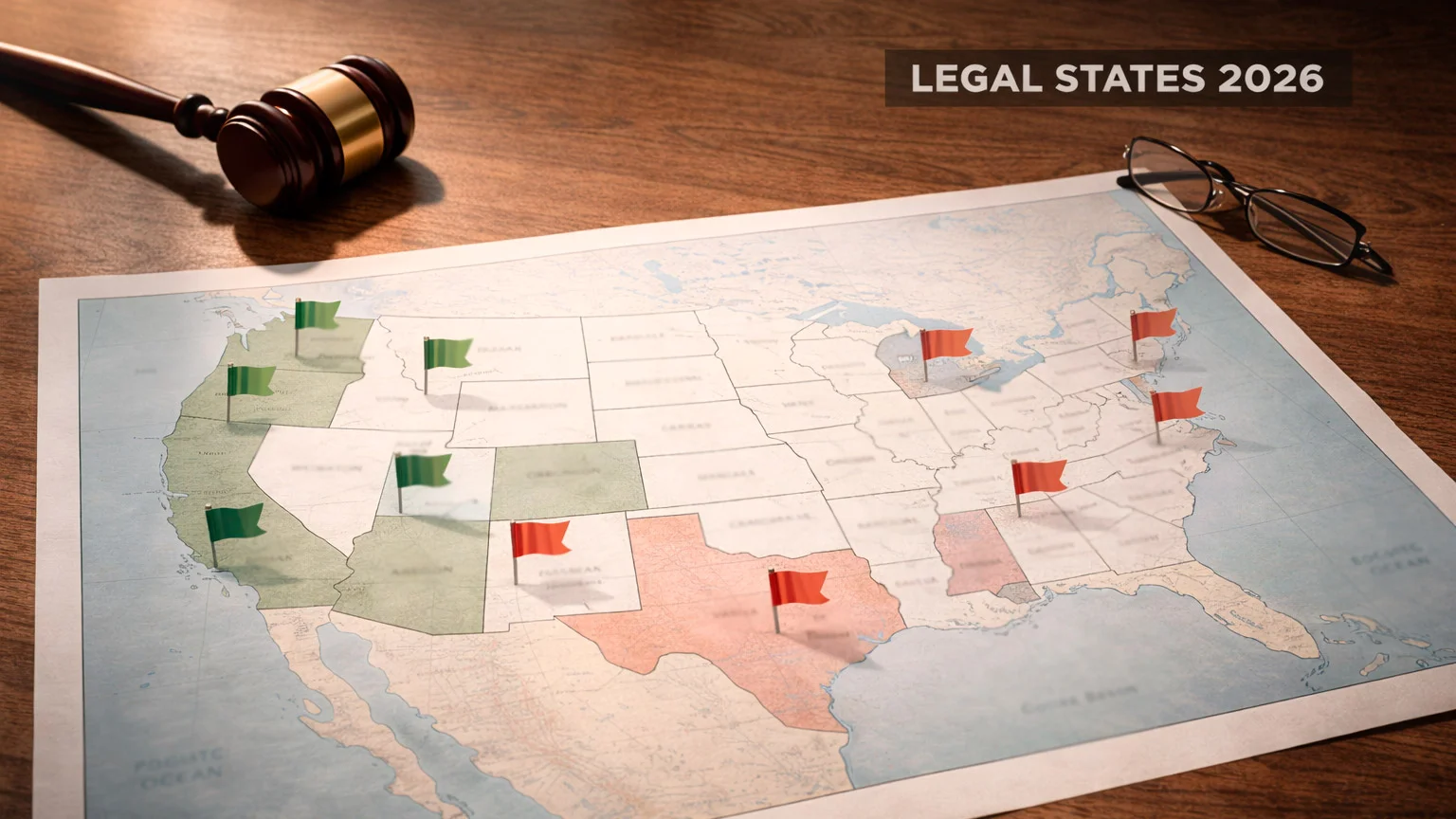
The legal ground is shifting fast. Six states enacted outright legislative bans on sweepstakes casinos during 2025, attorneys general in more than a dozen additional states issued cease-and-desist letters, and the first wave of criminal penalty frameworks went into effect at the start of 2026. For players, the consequence is practical: the platform you were using last year might be blocked in your state this year, and the platform you sign up for tomorrow might exit your state next month.
This guide maps the current legal landscape for sweepstakes blackjack across the United States. It covers the states that have banned operations outright, the states operating in a gray zone of enforcement actions without legislation, the legal model that sweepstakes casinos rely on and why it’s being challenged, and the penalties that now apply to operators, affiliates, and in some cases, the payment processors that facilitate transactions. Legality depends on your ZIP code, not the platform — and the ZIP codes that allow sweepstakes play are shrinking.
The Sweepstakes Legal Model: Why It Worked — and Why It’s Breaking
Every sweepstakes casino operates on the same legal premise, and understanding it is essential to understanding why states are now dismantling it. Traditional gambling requires three elements to exist simultaneously: consideration (you pay something), chance (the outcome is random), and prize (you can win something of value). If any one of those three elements is absent, the activity — legally speaking — is not gambling. This is the consideration-chance-prize triangle, and it has governed gambling classification in American law for decades.
Sweepstakes casinos remove the “consideration” element through a mechanism called AMOE, or alternative method of entry. The model works like this: the casino sells Gold Coins, which are a virtual currency with no redemption value. As a bonus attached to each purchase, the buyer also receives Sweeps Coins, which can be redeemed for cash prizes. Critically, Sweeps Coins are also available for free — through mail-in requests, social media giveaways, or daily login bonuses. Because a player can theoretically obtain Sweeps Coins without spending money, the sweepstakes operator argues that there’s no “consideration” and therefore no gambling.
This framework was built on decades of legitimate promotional sweepstakes law. McDonald’s Monopoly, Publisher’s Clearing House, and thousands of other promotions use the same no-purchase-necessary structure. The innovation — or the loophole, depending on your perspective — was applying this promotional framework to a product that looks, feels, and functions identically to an online casino. A player sitting at a sweepstakes blackjack table sees cards dealt on a virtual felt, places bets using virtual chips, and receives winnings in a currency that converts to cash. The experience is indistinguishable from regulated online blackjack. Only the legal classification differs.
The dual-currency architecture is the structural foundation of this argument. Gold Coins are positioned as the “product” being sold — a form of entertainment with no monetary value. Sweeps Coins are framed as a “promotional bonus” attached to that product, equivalent to the prize entry you receive when buying a McDonald’s meal. The legal argument is that the customer is buying entertainment (Gold Coins), not gambling stakes (Sweeps Coins). The fact that virtually every customer ignores the Gold Coins and focuses exclusively on the Sweeps Coins is, in the operator’s view, irrelevant to the legal analysis.
“Traditional gambling requires three elements: consideration, chance, and prize. Sweepstakes sites do not require payment, so they bypass regulations that apply to traditional online gambling.” — Magnus Boberg, Founder, JustGamblers. That bypass worked unchallenged for years. It stopped working when the scale became impossible to ignore — $10 billion in sales during 2024 alone, player bases in the tens of millions, and advertising budgets that rivaled regulated casinos. State legislators and attorneys general began asking whether a product used primarily as a gambling substitute should be regulated as one, regardless of its promotional sweepstakes wrapper.
The legal challenge isn’t about whether the AMOE structure technically satisfies the letter of existing sweepstakes law. It’s about whether that structure should continue to exempt platforms from gambling regulations when the vast majority of users treat them as gambling platforms. A 2025 survey of 2,250 sweepstakes casino users, conducted by the American Gaming Association and Interpret, found that 90% of players consider their activity on these platforms to be a form of gambling, and 68% cite winning real money as their primary motivation. When nine out of ten users say they’re gambling, the argument that the product isn’t gambling becomes difficult to sustain — not in a courtroom, necessarily, but in a state legislature where perception matters as much as precedent.
State-by-State: The 2025–2026 Ban Wave
Six states passed legislative bans on sweepstakes casinos during 2025, each with its own timeline, scope, and enforcement mechanism. Collectively, these bans eliminated sweepstakes casino access for tens of millions of Americans and removed billions of dollars from the industry’s addressable market. Here’s what happened in each state.
California
California delivered the single most consequential blow to the sweepstakes casino industry. Governor Newsom signed AB 831 on October 11, 2025, after the bill passed the state Senate 36-0 and the Assembly 63-0 — a unanimous bipartisan vote that left no room for industry appeal. The ban took effect on January 1, 2026.
The scale of California’s exit from the sweepstakes market is staggering. The state accounted for approximately 17.3% of all US sweepstakes casino sales, translating to over $2.42 billion in revenue during 2025. Losing California didn’t just hurt the industry — it removed its single largest market overnight.
AB 831 is also notable for its scope. The law doesn’t merely prohibit operators from offering sweepstakes casino games to California residents. It extends criminal liability to payment processors, geolocation service providers, content suppliers, and media affiliates who facilitate sweepstakes casino operations targeting the state. The penalty framework is discussed in the next section, but the breadth of responsibility is unlike any previous state action.
New York
New York’s crackdown came in two phases. In June 2025, Attorney General Letitia James issued cease-and-desist orders to 26 sweepstakes casino operators, all of which complied and stopped selling Sweeps Coins in the state. The New York market represented approximately $762 million in sales during 2024, according to Eilers & Krejcik Gaming.
“Online sweepstakes casinos are illegal, dangerous, and can seriously ruin people’s finances.” — Letitia James, Attorney General, State of New York.
The AG’s enforcement action was followed by legislation. Governor Kathy Hochul signed SB 5935 into law in December 2025, codifying the ban and establishing a statutory framework for enforcement. New York’s approach — enforcement first, legislation second — became a template that other states have since studied.
Connecticut, Montana, New Jersey, and Nevada
The remaining four states in the 2025 ban wave each had distinct motivations, but the legislative outcomes were remarkably similar. Connecticut, which legalized online casino gambling in 2021 through partnerships with the Mohegan and Mashantucket Pequot tribes, viewed sweepstakes casinos as direct competitors siphoning revenue from its regulated market. The state’s ban was driven substantially by tribal gaming interests, who argued that unregulated sweepstakes platforms undermined the exclusivity agreements that formed the basis of their compact with the state.
New Jersey’s position was even more pointed. As the state that launched legal online gambling in 2013 — the first to do so after Nevada’s poker-only model — New Jersey had built a mature iGaming market generating billions in revenue and hundreds of millions in tax receipts. Sweepstakes casinos operating in New Jersey without licenses, without paying taxes, and without submitting to the state’s gaming control board oversight were, in the legislature’s view, not just competitors but threats to the regulatory framework itself.
Nevada’s ban required no extended debate. The state’s entire economy is built around regulated gambling, and the idea of unregulated casino-style platforms operating within its borders was a non-starter. Montana’s approach was less about protecting an incumbent industry and more about consumer protection concerns, with legislators citing the lack of responsible gaming safeguards on sweepstakes platforms as a primary justification.
Together, these six states represent the first coordinated legislative response to sweepstakes casinos at the state level. The unanimity of the California vote and the speed of New York’s enforcement suggest that the ban wave has bipartisan momentum — a rarity in contemporary state politics. What makes the pattern especially significant is that it spans states with vastly different political orientations, economic profiles, and gambling histories. The consensus against unregulated sweepstakes isn’t a partisan issue; it’s an institutional one.
“This issue has brought lawmakers together… it represents illegal gambling and revenue theft in many states.” — Shawn Fluharty, President of NCLGS and West Virginia Delegate.
Penalties and Liability: Who Gets Prosecuted
The 2025–2026 bans didn’t just shut down sweepstakes casino access — they created criminal penalty frameworks that extend well beyond the operators themselves. California’s AB 831 set the most aggressive precedent.
Under AB 831, operating or facilitating an online sweepstakes casino targeting California residents is classified as a misdemeanor, carrying fines of $1,000 to $25,000 and up to one year in county jail. That penalty applies not just to the casino operator but to a broad category of participants in the sweepstakes ecosystem: financial institutions that process transactions, payment processors that handle Gold Coin purchases, geolocation providers that verify user location, content suppliers that deliver the games, and media affiliates that advertise the platforms.
For the affiliate marketing industry — which drives a substantial portion of sweepstakes casino traffic — the AB 831 liability clause was a shock. Affiliate websites that promote sweepstakes casinos to California users now face criminal exposure, not just loss of commissions. Several major affiliate networks quietly removed California-targeted sweepstakes content within weeks of the bill’s passage, well before the January 2026 effective date.
The class action landscape adds another layer of legal risk. Over 100 class action lawsuits were filed against sweepstakes casino operators across the country in 2025. VGW alone faced more than 20 lawsuits. Stake.us, A1 Development, and B2 Services each accumulated at least five. The litigation typically alleges that sweepstakes casinos operate as illegal gambling operations and seeks damages on behalf of players who lost money on the platforms. Utah and Alabama have emerged as particular hotspots for these filings, with plaintiffs’ attorneys targeting operators under those states’ broadly worded anti-gambling statutes.
The legal theory behind these class actions is straightforward: if sweepstakes casinos are gambling operations, then every dollar a player lost was collected through an illegal activity, and the operator owes restitution. If courts accept this argument — and several early rulings have allowed cases to proceed past the motion-to-dismiss stage — the financial exposure for major operators could reach into the billions. VGW, which processed over $2.83 billion in prize payouts across a single fiscal year, represents the most concentrated target.
The combination of legislative bans, criminal penalties, and civil litigation creates a three-front legal assault on the sweepstakes model. Operators face regulatory shutdowns in banned states, potential criminal prosecution under laws like AB 831, and financial exposure from class actions that could reach into the billions. For players, the practical concern is simpler but no less urgent: platforms under this level of legal pressure may exit additional states with limited notice, potentially affecting account balances and pending redemptions. If you have Sweeps Coins sitting in an account, redeem them. The legal environment doesn’t reward patience.
States Where Sweepstakes Blackjack Remains Accessible
Despite the ban wave, sweepstakes blackjack remains available in the majority of US states — roughly 44, depending on the platform and the current status of enforcement actions. The states where sweepstakes casinos continue to operate most comfortably share a common characteristic: they lack both a legislative ban and active attorney general enforcement.
The largest player populations are concentrated in states that don’t have legal online casino gambling. Texas, Florida, Ohio, Illinois, Georgia, and Pennsylvania (outside its regulated iGaming market) represent the core sweepstakes audience — millions of players in states where sweepstakes platforms are the only option for online blackjack that offers real-value prizes. These states are the economic engine of the sweepstakes industry, and they’re also the states where operators fight hardest to maintain access.
The irony is instructive. Sweepstakes casinos thrive precisely in states where legislatures have declined to legalize online gambling. The demand for online casino-style play doesn’t disappear because a state refuses to regulate it — the demand simply flows to the nearest available alternative. In states like Texas and Florida, sweepstakes platforms serve as the de facto online casino market, filling a gap that legislators created by inaction. Whether those same legislators will eventually ban sweepstakes casinos without offering a regulated alternative is a question that will define the industry’s trajectory over the next two years.
Accessibility, however, isn’t the same as security. Several states that haven’t passed bans have issued cease-and-desist letters or launched investigations. Arizona, Michigan, Louisiana, Maryland, and Illinois are among the states that have taken enforcement actions short of legislation. In these gray-zone states, sweepstakes casinos may still be operational, but the legal footing is unstable. A player in Arizona might be able to access Stake.us today and find it geoblocked next month, depending on how the state’s attorney general interprets existing gambling statutes.
Platform availability also varies by operator. Some sweepstakes casinos proactively exit states where they perceive elevated legal risk, even before formal enforcement actions. Others maintain operations until forced to leave. This means the list of states where sweepstakes blackjack is accessible isn’t uniform across platforms — one casino might operate in 40 states while another operates in 35, and the difference often comes down to each operator’s legal risk tolerance rather than any difference in the law itself.
The safest assumption for any sweepstakes player is that accessibility is temporary. The industry’s legal trajectory points toward more restrictions, not fewer. Before committing significant time or money to a sweepstakes platform, check the current status of your state’s regulatory posture — not just whether the platform currently works, but whether any pending legislation or attorney general actions could change that.
What’s Next: Pending Bills and the 2026 Outlook
“I do think this is a really critical issue for the gaming industry. How these issues play out over the next couple of years I think will have a fundamental impact on what this industry looks like decades from now.” — Chris Cylke, SVP of Government Relations, American Gaming Association. That assessment captures the stakes accurately. The sweepstakes casino industry is at an inflection point, and the legislative activity of 2025 was likely the beginning of a broader regulatory realignment, not the end.
Several additional states have introduced sweepstakes casino bills in their 2026 legislative sessions. The specific states and bill numbers change as sessions progress, but the pattern is consistent: states with established gambling industries — commercial casinos, tribal gaming operations, or legal iGaming markets — are the most likely to pursue bans. The lobbying pressure from incumbent operators is substantial. Commercial gaming revenue hit a record $78.72 billion in 2025, and the companies generating that revenue view sweepstakes casinos as unregulated competitors operating on their turf without paying licensing fees or state taxes.
States without established gambling industries face a different calculus. In Texas, Florida, and similar markets, there’s no incumbent casino lobby pushing for a ban — but there’s also no political appetite for legalizing online gambling, which means sweepstakes platforms exist in an uncomfortable middle ground. These states are unlikely to ban sweepstakes casinos in the near term, but they’re also unlikely to create a regulatory framework that would legitimize them. The status quo — technically legal, practically unregulated — may persist in these states longer than in states with competing gambling interests.
The industry’s own response has been fragmented. The Social Gaming Leadership Alliance (SGLA) and the Social and Prize Gaming Association (SPGA) represent competing visions for the industry’s future. “We want to be regulated. We want to pay taxes. It’s never dollar-for-dollar, you’re never wagering your money.” — Jeff Duncan, Executive Director, SGLA. That willingness to accept regulation suggests that at least some operators recognize the unsustainability of the current legal gray area. Whether state legislators will offer a regulated pathway — with licensing, taxation, and oversight requirements — or simply extend the ban wave remains the central question for the next two years.
The most likely outcome is a divergent map. States with regulated gambling industries will continue banning sweepstakes casinos, protecting their tax revenue and regulatory frameworks. States without regulated online gambling will allow sweepstakes platforms to continue operating, either through explicit inaction or through regulatory frameworks that legitimize the model. And a handful of states will attempt to bring sweepstakes casinos under existing gaming commission oversight — the approach that operators like SGLA claim to want, but that would dramatically increase their compliance costs and reduce their margins.
For players, the practical outlook is straightforward: the window of broad, minimally restricted sweepstakes access is closing. States that ban sweepstakes casinos are unlikely to reverse course. States that haven’t banned them yet may do so in 2026 or 2027. The wisest approach is to enjoy the access you currently have, maintain modest account balances that you can redeem quickly if conditions change, and monitor your state’s legislative calendar. The legal patchwork isn’t getting simpler — it’s getting more complex, faster than most players expect.
The wider context is set out in our sweepstakes blackjack guide.