

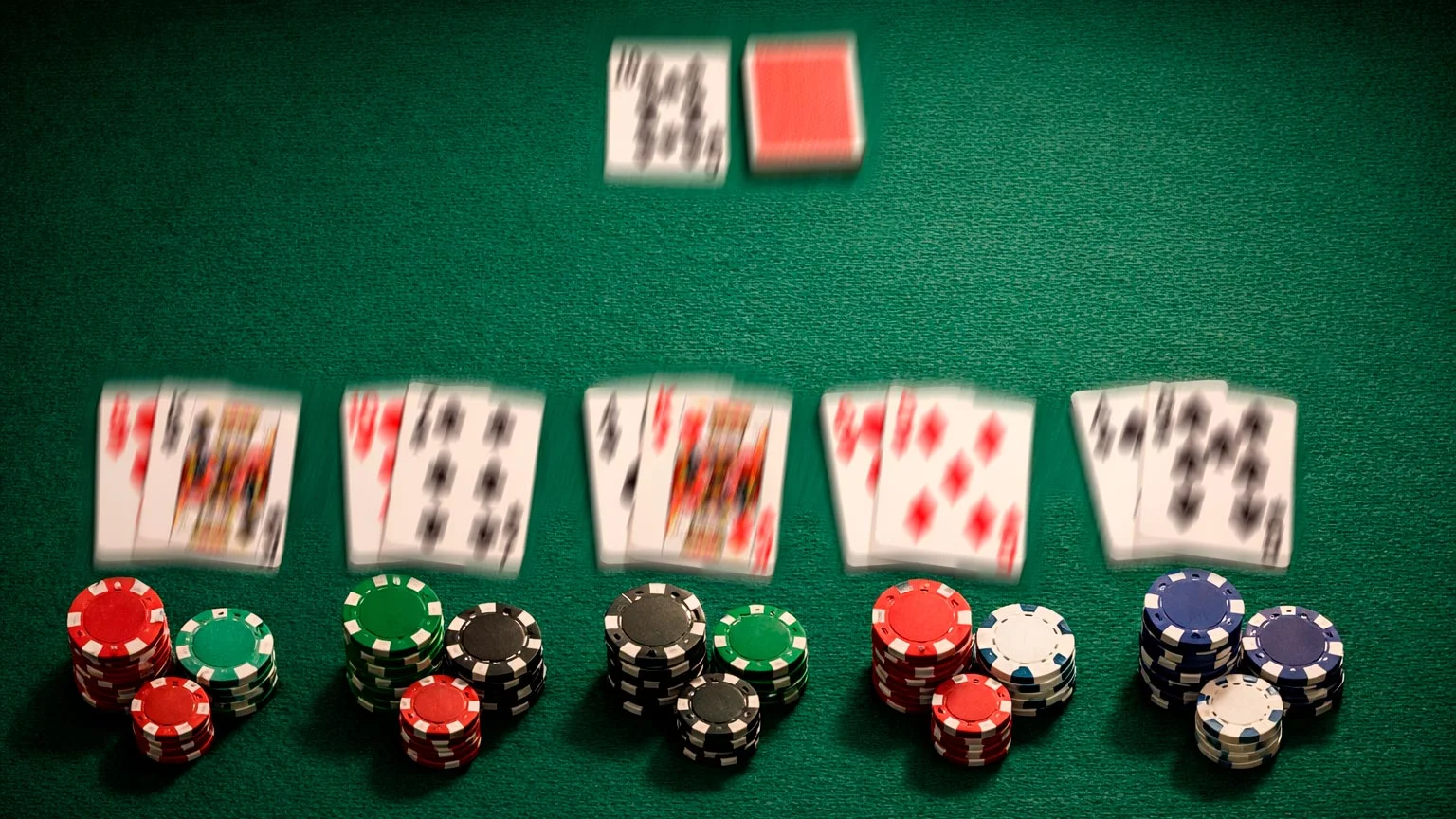
Multihand BJ — The Highest-RTP Sweepstakes Blackjack Variant
Multihand blackjack at sweepstakes casinos lets you play up to five simultaneous hands against a single dealer, and it carries the best return-to-player of any blackjack variant commonly found on these platforms — 99.62% RTP with optimal play. That 0.38% house edge puts it ahead of Classic (0.78%), Gravity (0.71%), and European variants (roughly 0.9%), making it the mathematically strongest option for players who want to extract maximum value from their Sweeps Coins.
But more hands per round doesn’t simply mean more chances to win. It means more variance exposure per betting cycle, faster bankroll movement in both directions, and a need for strategy discipline that scales with the number of active positions. According to Wizard of Odds, blackjack house edge with optimal basic strategy ranges from 0.3% to 0.5% depending on rule sets — and Multihand’s favorable doubling rules push it toward the bottom of that range. The edge is real, but capturing it requires understanding what changes when you’re managing more hands, more variance, and the same edge simultaneously.
How Multihand Differs from Single-Hand Blackjack
The core rules of blackjack don’t change in Multihand format. You’re still trying to beat the dealer by getting closer to 21 without busting. Hit, stand, double, and split decisions follow the same basic strategy logic. The dealer still draws according to fixed rules — typically standing on all 17s in the Multihand variants offered at sweepstakes platforms. What changes is the structure of each round.
In a standard single-hand game, you place one bet, receive one hand, make your decisions, and watch the dealer resolve. In Multihand, you place between two and five bets simultaneously, each occupying a separate position on the virtual felt. Cards are dealt to all positions, and you play each hand in sequence — leftmost first, then moving right. The dealer’s hand is revealed and resolved against all of your positions at once.
This structure creates a dynamic that single-hand players don’t experience: correlated outcomes. Because all your hands play against the same dealer upcard and final total, a dealer bust benefits every surviving hand simultaneously, while a strong dealer 20 or 21 wipes out every position that didn’t match or beat it. Your wins tend to cluster, and so do your losses. A round where the dealer busts on 26 might pay out on all five hands; a round where the dealer draws to 21 might cost you five bets in a single deal.
The RNG in sweepstakes Multihand blackjack typically deals from a single virtual shoe (usually six or eight decks), shuffled fresh before each round. Cards dealt to your first hand are removed from the pool before your second hand is dealt, which means the hands within a single round aren’t fully independent — they share a card pool. In practice, this has negligible strategic impact since the virtual shoe is large enough that card depletion across five hands barely shifts the probabilities. But it’s worth understanding the mechanic: your five hands are drawing from the same shuffled set, not from five parallel decks.
Variance and Bankroll Implications
Here’s the paradox of Multihand blackjack: it has a lower house edge than most other variants, yet it can drain your bankroll faster if you don’t adjust your bet sizing. The reason is straightforward — you’re wagering more per round. If you play five hands at 1 SC each, you’re risking 5 SC per round instead of 1. The house edge per hand is 0.38%, but your total expected loss per round is five times that of a single-hand game at the same per-hand stake.
Variance, on the other hand, behaves less intuitively. Playing multiple hands against the same dealer introduces positive correlation between your positions (they share the dealer outcome), which slightly increases the variance of your total round result compared to what you’d get from five completely independent hands. In plain terms: your swings are bigger than the raw hand count might suggest. A five-hand round where everything goes right feels euphoric; one where the dealer pulls 21 feels like a cliff.
For bankroll management, the practical rule is simple: divide your per-hand bet by the number of hands you’re playing. If your single-hand session budget supports 1 SC bets, your five-hand session should use 0.20 SC per position (if the table minimum allows it) or reduce to three hands at roughly 0.30 SC each. The goal is keeping your total risk per round consistent with your overall session budget, not your per-hand comfort level.
The smoothing effect of Multihand play appears over longer sessions. Because you’re resolving more hands per unit of time, your actual results converge toward the theoretical RTP faster than in single-hand play. Over 500 rounds of five-hand play (2,500 total hands), you’ll see fewer extreme deviations from the expected return than you would over 500 single-hand rounds. This is the mathematical upside of volume — but it requires a bankroll large enough to sustain the higher per-round exposure without hitting zero during a negative swing.
Strategy Adjustments for Multihand Play
The good news: basic strategy doesn’t change between single-hand and Multihand blackjack. The correct decision for a pair of 8s against a dealer ace is the same whether it’s your only hand or one of five. Hit, stand, double, and split thresholds are derived from the game’s rules and deck composition, not from the number of positions you occupy. If you’ve memorized a basic strategy chart for the rule set your platform uses, that chart applies identically across all your hands.
What does change is the decision-making pace. In a five-hand round, you’re making 10–25 individual decisions (depending on splits and doubles) in rapid succession. Fatigue and autopilot become real risks, especially at sweepstakes platforms where the deal speed can be configured faster than a physical table. The most common Multihand mistake isn’t a strategy error — it’s a clicking error. Hitting when you meant to stand, or failing to double a soft 18 against a dealer 6 because you’re racing to resolve hand number four.
One legitimate strategic consideration: splitting pairs. In single-hand play, splitting eights against a dealer 10 is the correct move because it minimizes losses on an already bad hand. In Multihand play, you might already have four other hands in play against that same dealer 10. Splitting your eights creates a sixth and seventh position, increasing your total exposure against an upcard that wins often. The math still says split — the expected value per hand doesn’t change — but the bankroll impact of an additional bet in a round where you’re already heavily invested feels different. Trust the math, but be aware of the psychological pull to deviate.
Insurance remains a bad bet in Multihand just as it is everywhere else. The temptation is stronger when you have five hands at risk against a dealer ace, but the payout structure of insurance (2:1 on a side bet with roughly 30.8% probability of winning in a six-deck game) makes it negative EV regardless of how many hands you’re protecting.
Where to Find Multihand BJ Across Platforms
Multihand blackjack isn’t available at every sweepstakes casino — it depends on which software providers the platform integrates. ICONIC21, the provider behind McLuck’s table game suite, offers a Multihand variant with the 99.62% RTP figure and allows up to five simultaneous hands. Playtech-powered platforms also feature Multihand options, though with slightly different rule configurations that can push the RTP a few tenths of a point in either direction.
Pulsz, WOW Vegas, and several newer operators carry at least one Multihand title in their blackjack lobbies. Chumba Casino and LuckyLand Slots, both operated by VGW, have historically leaned more heavily toward slots and proprietary games, making their Multihand offerings thinner. If Multihand is your preferred format, check the platform’s game library before registering — not after — because the variant selection differs meaningfully from one operator to the next.
When browsing, look for the game’s info or help screen. Most providers embed the full rule set and theoretical RTP within the game itself, accessible via a small “i” icon or menu button. That’s where you’ll confirm whether the Multihand table you’re about to sit at uses the favorable rule combination that produces the 99.62% figure, or a more restrictive setup with a higher house edge. The variant name alone isn’t enough — the rules are what matter.
The wider context is set out in our sweepstakes blackjack guide.
Playing five hands raises the swings: volatility.