

What Makes Gravity Blackjack Different from Every Other Variant
Gravity Blackjack takes a game that hasn’t changed much in three centuries and wraps it in a visual mechanic you’ve never seen at a traditional table. Cards don’t slide across a felt — they drop, tumble, and land with a physics-driven animation that gives each deal a sense of weight and momentum. It’s blackjack with a gravity twist, and beneath the visual polish, the game runs on the same hit/stand/double/split decision tree as any standard variant.
At sweepstakes casinos, Gravity Blackjack occupies a middle ground in the RTP hierarchy: 99.29% return-to-player with optimal basic strategy, which translates to a 0.71% house edge. That slots it between Classic Blackjack (99.22%) and Multihand (99.62%) — competitive enough to be worth playing, but not the mathematically optimal choice if raw return is your only criterion. Where Gravity earns its spot is engagement: the visual mechanic slows the pace just enough to make each hand feel deliberate, which is a meaningful difference for players who find standard RNG blackjack too mechanical. For comparison, slots at sweepstakes casinos run house edges anywhere from 2% to 15%, according to Vegas Insider, putting even Gravity’s slightly higher edge firmly in player-friendly territory.
The Gravity Mechanic Explained
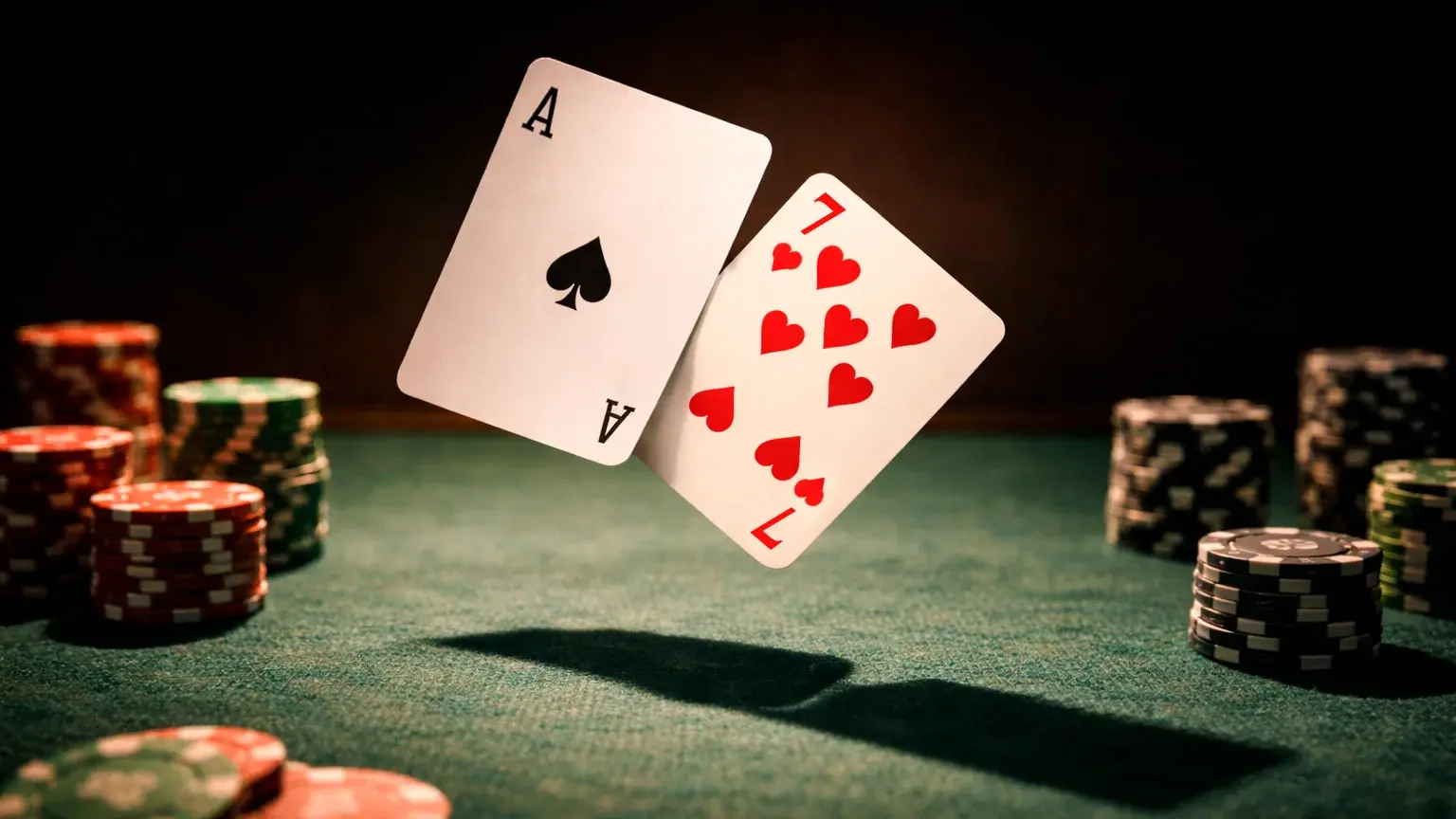
The defining feature of Gravity Blackjack is the card delivery system. Instead of the standard animation where cards appear flat on the table in sequence, cards in Gravity Blackjack descend from the top of the screen with a simulated weight. They fall, sometimes rotate, and settle into position on the virtual felt. The effect is cosmetic — it doesn’t alter the mathematical outcome of any hand — but it transforms the visual rhythm of the game in a way that’s harder to ignore than most casino UI tweaks.
Developed by ICONIC21, the same provider behind several other sweepstakes blackjack variants, Gravity Blackjack uses the same RNG engine and deck structure as its siblings. The cards are drawn from a virtual shoe (typically six decks), shuffled fresh before each round, with probabilities identical to those of Classic or Multihand variants running on the same platform. Nothing about the gravity animation alters the card distribution, the deck composition, or the dealer’s draw rules.
What the mechanic does affect is pace. A standard RNG blackjack hand resolves in three to five seconds at most platforms. Gravity Blackjack adds roughly one to two seconds per hand due to the falling animation. Over a hundred hands, that’s an extra two to three minutes of session time — not dramatic, but enough to reduce your hands-per-hour rate from the 200+ typical of fast RNG variants to something closer to 150–170. For players who use Sweeps Coins and care about bankroll preservation, that slower pace is a feature, not a bug. Fewer hands per hour means less total money wagered per session at the same bet size, which directly reduces the expected cost of a time-defined play session.
The visual presentation also includes enhanced lighting effects, card shadow rendering, and occasionally a subtle screen shake on blackjack (natural 21) hits. These are engagement tools, designed to make the game stickier from a UX perspective. They work — Gravity Blackjack tends to generate longer average session times than Classic variants on platforms that track the metric — but they have zero impact on your expected return or optimal strategy.
RTP and House Edge Analysis
Gravity Blackjack’s 99.29% RTP assumes the player follows basic strategy perfectly. The underlying rules at most ICONIC21 deployments include: six-deck shoe, dealer stands on all 17s (including soft), doubling allowed on any two cards, splitting up to three times, and blackjack pays 3:2. This rule set is moderately player-friendly — the “dealer stands on soft 17” provision alone saves roughly 0.2% compared to variants where the dealer hits soft 17.
The 0.71% house edge is competitive within the sweepstakes blackjack landscape, though it’s not the tightest available. Multihand Blackjack, with its more favorable rule combination, offers a 0.38% edge — nearly half of Gravity’s. Classic Blackjack at 0.78% is slightly worse. European Blackjack, with its no-hole-card rule and restricted doubling, typically runs around 0.9%.
In dollar terms, the Gravity house edge means an expected cost of about 0.71 SC per 100 SC wagered. Over a 200-hand session at 1 SC per hand, your theoretical loss is approximately 1.42 SC. That’s a narrow margin, and short-term variance will dominate your actual results — you might end a session up 20 SC or down 15 SC, and neither outcome says much about the game’s fairness. The house edge only manifests reliably across thousands of hands, which is why single-session anecdotes about being “due” or a game being “cold” have no mathematical basis.
Strategy Considerations Unique to Gravity BJ
There are no strategy deviations specific to Gravity Blackjack. The basic strategy chart for a six-deck game where the dealer stands on soft 17 applies fully. Hard 12 against a dealer 4? Stand. Soft 17 against a dealer 7? Hit. Pair of aces against anything? Split. The gravity animation changes nothing about these decisions — the cards that fall from the top of the screen follow the same probability distribution as cards that slide from the side.
The strategic nuance is behavioral, not mathematical. Because the gravity mechanic slows the deal and adds visual drama, players tend to engage more emotionally with each hand. That can cut both ways. On the positive side, you’re less likely to zone out and misclick — the animation gives you a natural pause to process the hand before deciding. On the negative side, the heightened visual feedback on losses (the gravity drop feels heavier when you bust) can trigger tilt faster than a sterile numeric interface would.
If you’re transitioning from a faster variant like Speed Blackjack to Gravity, give yourself a few hands to adjust to the tempo before committing Sweeps Coins. The decision logic is identical, but the rhythm is different enough that your first few rounds might feel disorienting. Use Gold Coins for the adjustment period — that’s what the dual-currency system is for.
Which Sweepstakes Casinos Offer Gravity Blackjack
Gravity Blackjack is an ICONIC21 title, which means its availability is tied to platforms that integrate ICONIC21’s game suite. McLuck is the most prominent carrier, featuring Gravity Blackjack alongside Classic, Multihand, and other ICONIC21 variants. Several newer sweepstakes operators that launched in 2024 and 2025 also picked up the ICONIC21 portfolio, expanding Gravity’s footprint beyond a single platform.
Platforms powered by Playtech or proprietary engines generally don’t offer Gravity Blackjack — it’s a provider-specific product, not a universal variant. If Gravity is the format you’re after, confirm ICONIC21 is in the platform’s provider list before signing up. The game is typically filed under “Table Games” or “Blackjack” in the lobby, though some operators label it under “Featured” or “New Games” depending on how recently they added it.
Availability can also shift over time. Sweepstakes platforms regularly rotate their game libraries, adding new titles and occasionally retiring underperforming ones. A platform that doesn’t carry Gravity today might add it next quarter as part of a provider deal, while a platform that features it prominently could de-emphasize it if player engagement metrics drop. Checking the current library at the time you plan to play is more reliable than relying on outdated review sites — the sweepstakes market moves faster than most coverage keeps up with.
The wider context is set out in our sweepstakes blackjack guide.