
RTP Is the Single Most Important Number in Sweepstakes Blackjack
Return to Player is the one metric that tells you, over thousands of hands, how much of your wager a blackjack game is designed to give back. Everything else — flashy interfaces, bonus promotions, brand reputation — is noise compared to this number. A game with 99.5% RTP returns $99.50 for every $100 wagered in the long run. A game with 97% RTP keeps three dollars out of every hundred. Over a session of 300 hands, that gap is the difference between mild entertainment and slow bleeding.
In sweepstakes blackjack, RTP matters even more than it does in regulated casinos, because the transparency standards are lower. Regulated iGaming states require operators to publish audited RTP figures and submit to periodic testing. Sweepstakes casinos, operating under promotional sweepstakes law rather than gaming regulation, face no such mandate. Some platforms voluntarily disclose RTP; many do not. Knowing which variants historically offer the best return — and which rule sets drag it down — is your primary tool for game selection.
According to Wizard of Odds, blackjack played with optimal basic strategy carries a house edge between 0.3% and 0.5%, translating to an RTP of 99.5% to 99.7%. That makes it the lowest house edge game available at any sweepstakes casino, and one of the best bets in all of online gaming. But that range assumes you are playing a favorable rule set and making correct decisions on every hand — two conditions that are far from guaranteed.
RTP and House Edge: What the Numbers Actually Mean
RTP and house edge are two sides of the same coin. If a game has a 99.22% RTP, the house edge is 0.78%. If the house edge is 0.5%, the RTP is 99.5%. They always sum to 100%. The distinction matters because different sources use different conventions — game providers tend to advertise RTP (bigger number, sounds better for the player), while strategy guides focus on house edge (smaller number, easier to calculate expected losses).
What neither number captures is variance. RTP tells you what happens across tens of thousands of hands. In a single session of 50 or 100 hands, anything can happen. You might win 60% of your hands and walk away with a profit, or you might catch a streak of dealer blackjacks and lose half your bankroll. Variance is the noise; RTP is the signal. The longer you play, the more your results converge toward the theoretical return. For a game with 0.5% house edge, that convergence means a slow, predictable drain — not a catastrophic one, but a drain nonetheless.
One common misunderstanding: RTP is calculated assuming perfect basic strategy. If you play on intuition — hitting soft 18 against a 6, standing on 12 against a 10 — your effective RTP drops. Badly. Vegas Insider data shows that a double-deck game with liberal rules offers a house edge as low as 0.25% under optimal play. Tighten those rules — dealer hits soft 17, doubling restricted to 10 and 11 only — and the edge climbs to 0.7%. Add imperfect strategy on top of restrictive rules, and a player can easily face a true house edge above 2%, which puts blackjack in the same neighborhood as roulette.
Variant-by-Variant RTP Table
Not all sweepstakes blackjack games are created equal. The variant you choose determines the baseline RTP before your strategy decisions even enter the picture. Below is a breakdown of the most common variants available across major sweepstakes platforms, with approximate RTP values based on published game specifications and standard rule assumptions.
| Variant | Approximate RTP | House Edge | Key Rule Features |
|---|---|---|---|
| Classic Blackjack | 99.22% | 0.78% | Standard 6-deck rules, dealer stands on soft 17 |
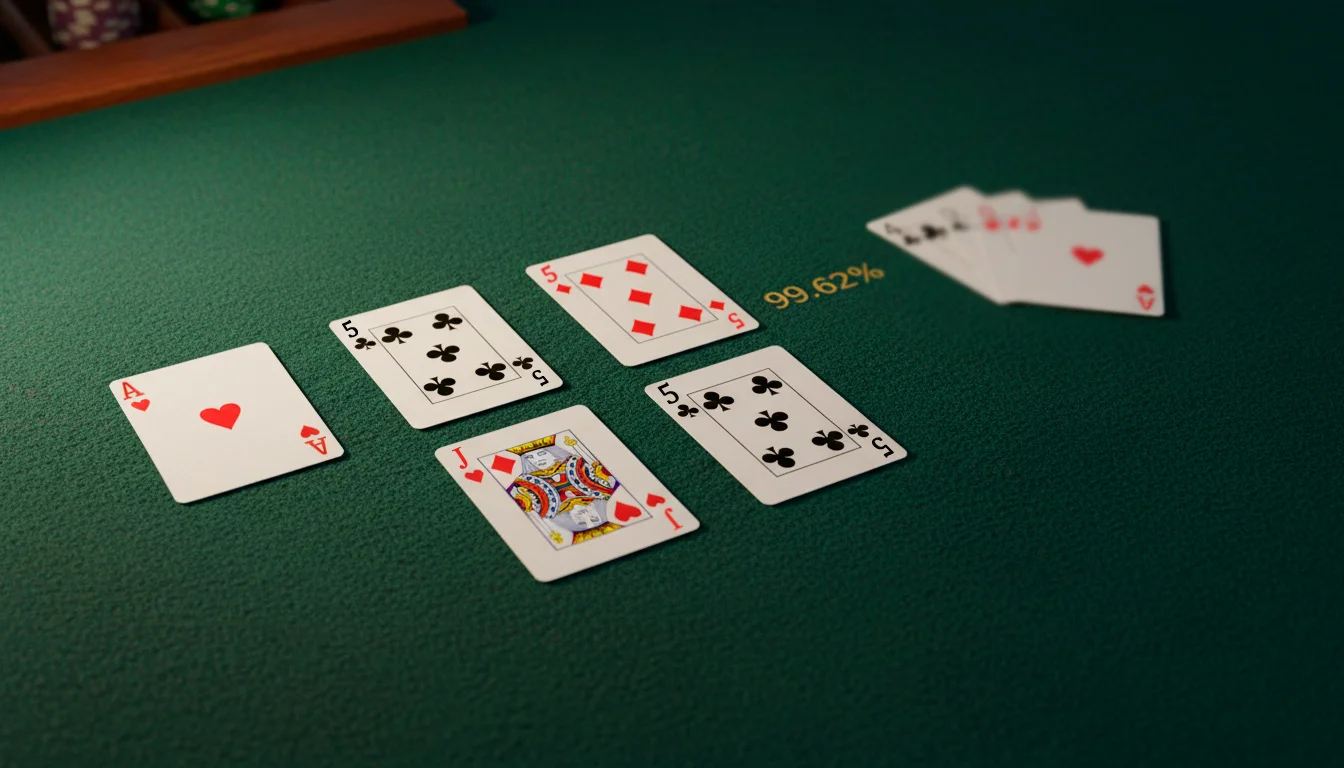
| Multihand Blackjack | 99.62% | 0.38% | Play up to 5 hands simultaneously, liberal double/split rules |
| Gravity Blackjack | 99.29% | 0.71% | Visual gravity mechanic, standard rule base |
| Speed Blackjack | ~99.2% | ~0.8% | Accelerated dealing, reduced decision time |
| European Blackjack | ~99.1% | ~0.9% | No hole card, double on 9-11 only |
| All Play Blackjack | ~99.0% | ~1.0% | Proprietary rules, platform-specific |
Multihand Blackjack consistently offers the best theoretical return, largely because platforms that carry it tend to bundle liberal rule sets — double on any two cards, resplit aces, surrender available. Classic Blackjack is the safe middle ground: well-understood, widely available, and predictable. Gravity Blackjack sits close to Classic in RTP but adds visual flair that appeals to players who find the standard format dry. European Blackjack penalizes the player slightly through the no-hole-card rule, which affects strategy for doubles and splits when the dealer shows an ace or ten.
These numbers assume optimal play. If you are making occasional errors — failing to double soft hands, standing too often on 12-16 against low dealer cards — subtract 0.2% to 0.5% from the theoretical RTP to estimate your actual return. Every decimal point matters when you are playing hundreds of hands per session.
Which Providers Deliver the Best RTP
The software provider behind a blackjack game determines its rule set, RNG certification, and default house edge. At sweepstakes casinos, the two providers you will encounter most frequently are ICONIC21 and Playtech (under various licensing arrangements). VGW, the operator behind Chumba Casino and LuckyLand Slots, develops proprietary games in-house.
ICONIC21 supplies blackjack variants to several mid-tier and newer sweepstakes platforms. Their Multihand and Classic titles tend to carry competitive RTPs, though the exact configuration can vary by operator — the same ICONIC21 Classic Blackjack might have slightly different rules at different casinos if the operator customizes parameters. Playtech’s sweepstakes-licensed games generally adhere to well-documented rule sets with published RTP sheets, making them the most transparent option available.
VGW’s proprietary games are harder to evaluate externally because the company does not publish RTP data in the same way third-party providers do. Players on Chumba or LuckyLand must rely on the platform’s terms of service and whatever disclosures appear in the game info screens, which are often vague. This opacity is not necessarily an indication of unfavorable odds — VGW’s blackjack games play similarly to standard variants — but it does mean you are trusting the operator rather than verifying through independent audit.
Why RTP Transparency Varies Across Platforms
In regulated iGaming states like New Jersey and Michigan, online casinos must submit their games to independent testing labs — GLI, eCOGRA, BMM — and make RTP data available to the state regulator. Players in those jurisdictions can verify that the blackjack game they are playing returns what it claims to return. The sweepstakes industry has no equivalent requirement.
Some sweepstakes platforms use provably fair systems — cryptographic methods that let players verify individual hand outcomes after the fact. This proves that a specific hand was dealt according to a predetermined random seed, but it does not prove anything about the aggregate RTP across thousands of hands. Provably fair confirms the shuffle was honest; it does not confirm the rules are favorable.
Magnus Boberg, founder of JustGamblers, has pointed out that sweepstakes platforms sidestep the regulatory frameworks that apply to traditional gambling, which means they are not bound by the same disclosure and audit standards. For blackjack players, this creates a practical problem: you can look up the theoretical RTP for a given rule set, but you cannot independently confirm that the platform is implementing those rules as advertised.
The best defense is to stick with variants from known providers whose rule sets are publicly documented, play enough hands to observe whether your results roughly match theoretical expectations, and avoid games where the operator refuses to disclose even basic rule information. If a platform will not tell you whether the dealer hits or stands on soft 17, that platform is not worth your Sweeps Coins.